
Book Review: Paul Copan, Is God a Moral Monster: Making Sense of the Old Testament God (2011)
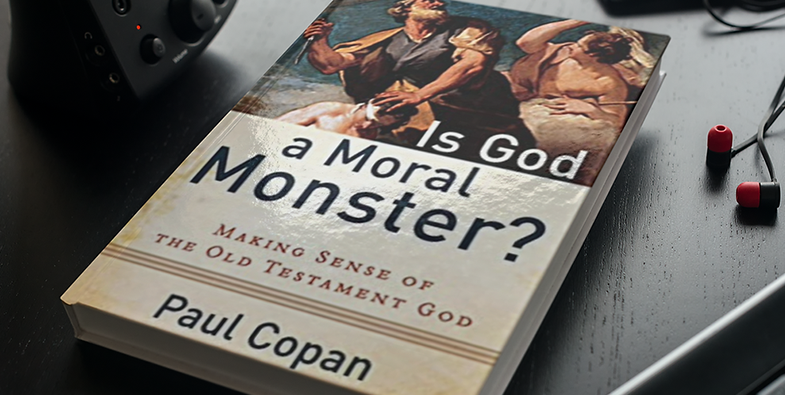
Paul Copan’s Is God a Moral Monster is one of the most thorough inquiries into the moral issues presented in the Old Testament. It covers such topics as slavery, the treatment of women, harsh punishments, and massacres. Although written primarily as an apologetic work to address criticism of the New Atheists, the book provides a strong basis for understanding how the often-criticized laws of the Pentateuch reflect the character of God.
Paul Copan his M.Div. at Trinity International University in biblical and systematic theology and his Ph.D. in the philosophy of religion from Marquette University. For six years, he served as the president of the Evangelical Philosophical Society, and he has written or edited more than forty-five books in religion and apologetics. He is currently the Pledger Family Chair of Philosophy and Ethics at Palm Beach Atlantic University, Florida. His training in Old Testament history and his focus on morality and ethics makes him uniquely suited to discussing moral issues related to the Jewish Law.
The introductory section of the book (two chapters) discusses the Old Testament problem raised by New Atheists Daniel Dennet, Richard Dawkins, Christopher Hitchings, and others. For example, he quotes Dawkins as saying, “The God of the Old Testament is arguably the most unpleasant character in all fiction: jealous and proud of it; a petty, unjust, unforgiving control freak; a vindictive, bloodthirsty, ethnic cleanser; a misogynistic, homophobic, racist, infanticidal genocidal, filicidal, pestilential, megalomaniacal, sadomasochistic, capriciously malevolent bully.”
Over the next sixteen short chapters, Copan addresses these charges, spending most time on the complex issues of massacres, slavery, and treatment of women, with chapters on “the Bible’s ubiquitous weirdness,” God’s jealousy, the demand for praise, and whether religion causes violence. In some cases, his explanations thoroughly debunk criticisms of the Old Testament by demonstrating that a lot of criticism is the result of not taking time to understand the text. In others, he admits the difficulties involved and provides reasonable explanations, though some may dispute them. Along the way, he helps to explain how the Old Testament reveals the loving and merciful character of God despite the seeming problems that some texts provide.
His argument rests on three major premises. The first premise is that the purpose of many ritual laws, such as dietary, cleanliness, clothing, and separation laws, is to teach people to live holy lives separate from the world. In some cases, the focus was understanding the difference between life and death, which is the basis for many cleanliness and dietary laws, such as laws against eating carrion or the treatment of lepers. It was not, as many believe, merely for health reasons that some food or disease was forbidden, since otherwise the divisions make no sense (e.g., no rabbits but goats are okay). Understanding God’s emphasis on separation from the world and from death not only help to explain many laws (such as why wearing clothes of two different fabrics was forbidden), but it provides critical background to understanding the purpose of all laws.
Copan’s second major premise is that we must differentiate among various types of laws. Some laws, such as the ten commandments, were God’s eternal command based on His character. Some laws, such as much of Numbers and Deuteronomy, was what Copan calls “case law” that provides examples of how to apply earlier laws under specific circumstances. Some of what critics call laws was in fact temporary guidance, such as what we see in prophecy or history. For example, much of what God commanded judges or kings was situational. This argument is key to differentiating among the purposes and helps readers find context. When reviewing this context, it quickly becomes clear that God had a greater plan and objective, which He worked out over time.
Copan’s final premise is that the Old Testament law was a temporary, incremental, and compromising solution to the human condition. That the law was temporary is clear, since Paul argues that the purpose of the law is to reveal sin and point us to Christ as the permanent solution to the problem of sin (Gal. 3:24, Rom. 7:1-12). That the law was incremental is also clear. For example, God changes His guidance after the daughters of Zelophehad raised a question (Num. 27:1-5). This was not a wholesale change in principle but rather a change in the application of principle to meet specific needs.
That the law is a compromise with local culture takes a little more research. Copan provides many comparisons with the laws of Hammurabi, Nebuchadnezzar, Egypt, and other regional cultures. These demonstrate that, in fact, the Jewish law was far kinder and more moderate in most cases than that of neighboring cultures, reflecting a God of love. Thus, while other cultures tended to favor slaveholders, God established that His people are to treat slaves well and give them opportunities for freedom. Although the law doesn’t condemn slavery outright, as the New Atheists demand, it provides a pathway to freedom for most people. It is in this way that the law is a compromise with human nature as God sought to bring people gradually to accept that slavery is wrong.
Although Copan doesn’t raise it, this last premise leads to one of the objections many Christians may have about how he presents the law. Copan’s premise appears to conflict with statements such as “the law is perfect” (Ps. 19:7) or “the law is holy, and the commandment holy, and just, and good” (Rom. 7:12). However, many point out that perfect here means complete and holy means separate. The fact that the law is temporary, incremental, and compromising does not prevent it from being complete, just, and good. It was part of God’s perfect plan to teach people what is right and how to be just and good, but His plan was always to give people a better way of being made righteous through Christ and the sanctification of the Holy Spirit.
Paul Copan’s book, Is God a Moral Monster?, is an excellent tool for the apologist who needs help with explaining the purpose of the Old Testament law. Not all atheists will agree with his conclusions, but its explanations are sound, thorough, and plausible even when not fully convincing. Yet the book provides an equally important aid to Christians in understanding the purpose and context of laws that might seem to be immoral or problematic. By understanding the law, we can better understand God and the separated life to which He has called us.
